

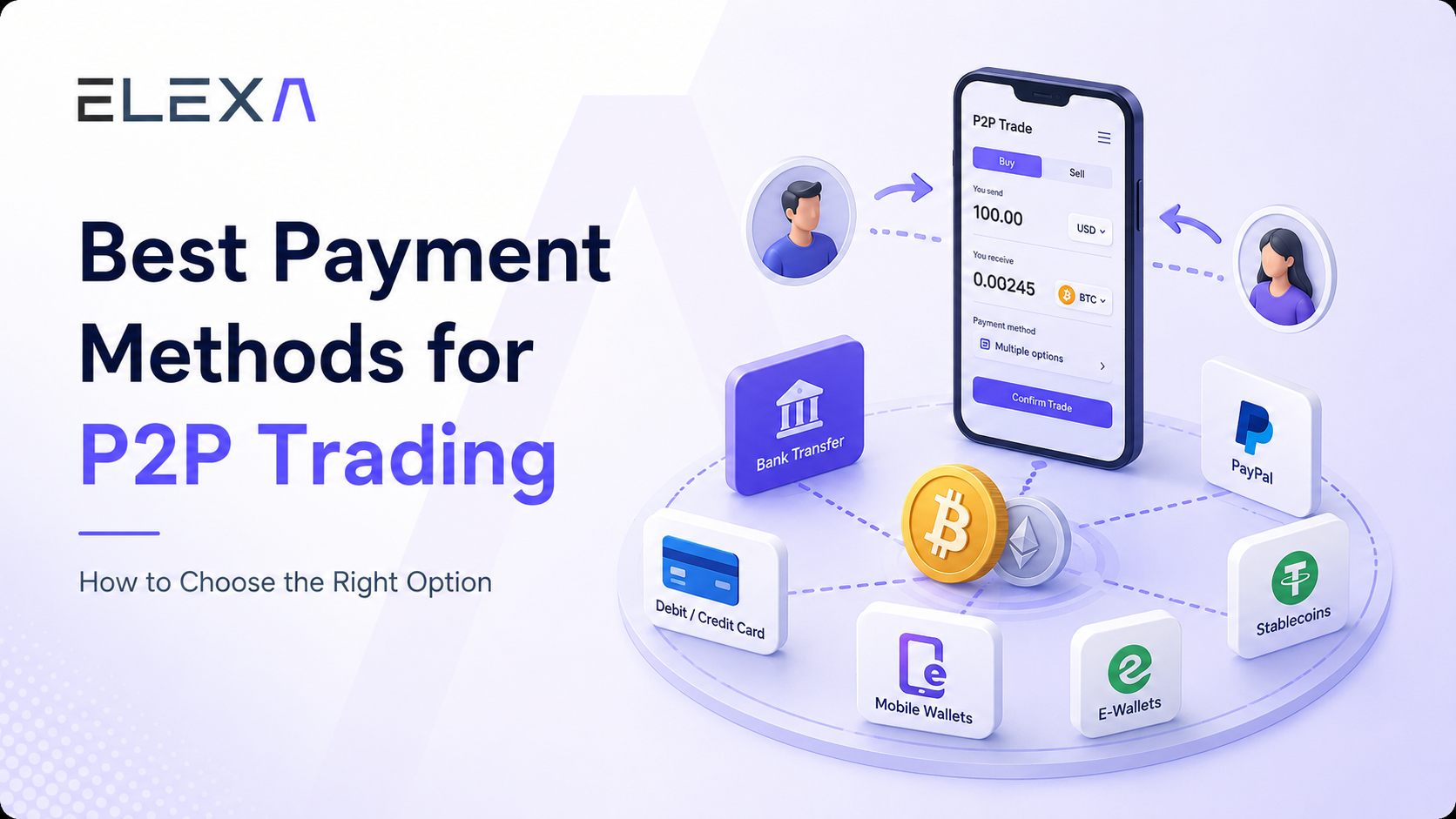
Best Payment Methods for P2P Trading: How to Choose the Right Option
Answer First
The best payment method for P2P crypto trading depends on your country, trade size, speed needs, risk tolerance, and whether you are buying or selling crypto.
For buyers, the best payment method is usually one that is fast, available in your region, easy to prove, and accepted by reliable sellers. For sellers, the best payment method is one that is easy to verify, difficult to reverse, and linked to the buyer’s own account.
Common P2P payment methods include:
- Bank transfers
- Mobile money
- Digital wallets
- Local payment apps
- Cash deposits
- Debit or credit card-based transfers
- Gift cards
- Payment processors
- Regional payment systems
No payment method is perfect. Some are fast but riskier. Some are safer but slower. Some are popular in one country but not available in another.
The safest approach is to choose a payment method you understand, read the offer terms carefully, trade with reliable counterparties, keep proof of payment, and avoid off-platform deals.
Introduction
P2P crypto trading gives users the flexibility to buy and sell crypto directly with other people. Instead of relying on a single payment rail, users can choose from multiple payment methods based on what is available in their country or region.
This flexibility is one of the biggest advantages of P2P trading.
A user in one country may prefer bank transfer. Another may prefer mobile money. A freelancer may want to receive payment through a digital wallet. A local trader may choose a payment method that settles quickly during business hours.
But payment flexibility also brings risk.
In a P2P trade, the crypto and the payment do not always move through the same system. Crypto may be handled through the marketplace flow, while fiat or local payment moves through a bank, payment app, mobile wallet, or another provider.
That means users need to understand the payment method before they trade.
A good payment method should be clear, traceable, and easy to verify. A risky payment method may cause disputes, chargebacks, delays, fake receipts, or account ownership problems.
This guide explains the most common payment methods in P2P trading, their benefits, risks, and how buyers and sellers can choose the right option.
What Is a Payment Method in P2P Trading?
A payment method in P2P trading is the way the buyer pays the seller outside the crypto platform.
For example, if a buyer wants to buy crypto from a seller, the buyer may send local currency through:
- A bank transfer
- A mobile money transfer
- A digital wallet
- A local payment app
- A cash deposit
- A regional payment network
Once the seller confirms the payment, the crypto side of the trade is completed according to the platform’s process.
In many P2P marketplaces, sellers create offers and choose which payment methods they accept. Buyers then select offers that match their preferred payment method.
This is why payment methods are central to P2P trading. They affect speed, safety, cost, availability, and trust.
Why Payment Method Choice Matters
Choosing the wrong payment method can create problems even if both users are honest.
A payment may be delayed. A receipt may be unclear. The payment may come from a third-party account. The bank may mark it as pending. The payment app may allow reversals. The seller may not recognize the sender name.
In P2P trading, the payment method affects:
- How fast the trade completes
- How easy it is to verify payment
- Whether payment can be reversed
- Whether proof of payment is reliable
- Whether third-party payments are possible
- How likely a dispute is
- How comfortable buyers and sellers feel
For buyers, a good payment method should make it easy to send payment and prove that payment was made.
For sellers, a good payment method should make it easy to confirm that payment was actually received and final.
Payment Method 1: Bank Transfer
Bank transfer is one of the most common payment methods in P2P trading.
In a bank transfer, the buyer sends money from their bank account to the seller’s bank account. The seller then checks their bank account and confirms whether the payment has arrived.
Benefits of Bank Transfer
Bank transfers are widely used and familiar to many users. They often provide transaction records, sender details, receiver details, timestamps, and amounts. This makes them easier to review if there is a dispute.
Bank transfer can be a good option because:
- It is widely available in many countries
- Payment records are usually clear
- Account holder names may be visible
- It can support larger trade amounts
- It is familiar to both buyers and sellers
Risks of Bank Transfer
Bank transfers can still create problems.
Some transfers may be delayed. Some may show as pending before final settlement. Some banks may reverse or hold payments under certain conditions. Third-party transfers can also create risk if the payer name does not match the buyer.
Common risks include:
- Delayed settlement
- Wrong account details
- Third-party payments
- Pending payment confusion
- Bank restrictions
- Fraudulent transfer claims
Best Practice
Bank transfer is often a strong option when both parties use accounts in their own names, payment details are clear, and the seller verifies payment directly from their bank account.
Sellers should never complete a trade based only on a screenshot.
Payment Method 2: Mobile Money
Mobile money is especially important in many emerging markets. It allows users to send and receive money through mobile-based financial services.
In some countries, mobile money is more common than traditional bank accounts. This makes it very useful for P2P crypto trading.
Benefits of Mobile Money
Mobile money can be fast, accessible, and convenient. It often works well in markets where mobile financial services are widely adopted.
Mobile money can be useful because:
- It is fast
- It is accessible to users without traditional bank accounts
- It is popular in many local markets
- It works well on mobile devices
- It may support small and medium trades
Risks of Mobile Money
The main risks depend on the provider and local rules. Some payments may be reversible or disputed. Sender details may not always be clear. Some users may rely on agents or third parties, which can create evidence problems.
Common risks include:
- Reversal risk
- Agent-related confusion
- Third-party payments
- Limited transaction records
- Account ownership questions
- Service downtime
Best Practice
Mobile money can be effective when both users understand the provider, payment confirmation is clear, and the seller verifies the payment directly inside the official app.
Payment Method 3: Digital Wallets
Digital wallets allow users to send and receive money through wallet-based apps or online payment services.
These may include global wallets, regional wallets, or local e-wallet platforms.
Benefits of Digital Wallets
Digital wallets can be fast and convenient. Many users already use them for online payments, freelance work, small business payments, or cross-border transactions.
Digital wallets may be useful because:
- They are fast
- They are easy to use
- They may support multiple currencies
- They work well for online users
- They often provide digital receipts
Risks of Digital Wallets
Some digital wallets allow disputes, reversals, or account freezes. In some cases, payments may be made from accounts that do not match the buyer’s identity.
Common risks include:
- Chargeback or reversal risk
- Account limitations
- Third-party payments
- Fake screenshots
- Pending status confusion
- Regional restrictions
Best Practice
Digital wallets are best used when the payment is final, sender details are clear, and both users understand the wallet’s dispute and reversal policies.
Payment Method 4: Local Payment Apps
Many countries have local payment apps that are widely used for everyday transfers. These apps may be connected to banks, wallets, QR payments, or mobile numbers.
Examples vary by country, but the idea is the same: users trade crypto through P2P marketplaces and pay using a familiar local app.
Benefits of Local Payment Apps
Local payment apps can be very effective because they fit local user behavior. Buyers and sellers already know how they work.
Benefits may include:
- Fast settlement
- High local adoption
- Mobile-friendly experience
- Easy transfers
- Familiar payment flow
Risks of Local Payment Apps
The risk depends on the app. Some apps provide clear confirmations. Others may have limited proof or unclear settlement rules.
Common risks include:
- Fake receipts
- Payment delays
- Name mismatch
- App downtime
- Transfer limits
- Support difficulties
Best Practice
Users should choose local payment apps that provide clear transaction history, sender information, and final payment confirmation.
Payment Method 5: Cash Deposit
Cash deposit means the buyer deposits cash into the seller’s bank account or through an approved payment agent.
This method may be used in markets where cash is still common or where users do not have access to online banking.
Benefits of Cash Deposit
Cash deposit can help users who prefer cash-based payments. It may also be useful in regions where digital payment access is limited.
Benefits include:
- Useful for cash-based users
- May be available without online banking
- Can support local currency trading
- Familiar in some markets
Risks of Cash Deposit
Cash deposit can be harder to verify. Receipts may be unclear or fake. Sender identity may not match the buyer. It can also create compliance and fraud concerns.
Common risks include:
- Fake deposit receipts
- Third-party deposits
- Weak sender identity
- Manual verification delays
- Higher dispute risk
Best Practice
Cash deposit should be used carefully. Sellers should verify funds directly in their bank account and confirm that the deposit matches the trade details.
Payment Method 6: Cards and Card-Linked Transfers
Some P2P users may use card-based transfers, debit card-linked payments, or payment services connected to cards.
Benefits
Card-linked payments can be convenient and fast. They may be useful for users who do not want to manually enter bank details.
Benefits may include:
- Speed
- Convenience
- Familiar user experience
- Mobile app support
Risks
Card payments can carry chargeback risk. They may also involve third-party processors, fraud checks, and account limitations.
Risks include:
- Chargebacks
- Payment holds
- Fraud disputes
- Account restrictions
- Reversal risk
Best Practice
Sellers should be cautious with payment methods that allow reversals. Card-linked transfers may not be ideal for high-value trades unless the seller understands the risk.
Payment Method 7: Gift Cards
Gift cards are used in some P2P trading environments, but they are also one of the riskier payment methods.
In a gift card trade, one user may exchange a gift card balance or code for crypto.
Benefits
Gift cards can be useful for users who receive gift cards and want to convert them into crypto or local value. They may also be popular in certain countries and online communities.
Benefits include:
- Access for users without banking options
- Useful for gift card holders
- Popular in some markets
- Can create niche liquidity
Risks
Gift cards are high-risk because they can be stolen, already redeemed, region-locked, fake, or disputed. Codes can be used quickly, and evidence can be difficult to verify.
Risks include:
- Invalid cards
- Already redeemed codes
- Stolen card risk
- Region restrictions
- Fake screenshots
- High dispute rate
- Difficult verification
Best Practice
Gift card trades should be handled with strict rules, verified merchants, clear evidence, and smaller limits. Beginners should be careful with gift card-based P2P trades.
Payment Method 8: Regional Payment Systems
Some regions have their own payment networks or popular transfer systems. These may be bank-based, app-based, QR-based, or wallet-based.
Regional payment systems can be very important in P2P trading because they often match local habits better than global payment methods.
Benefits
Regional systems may offer:
- Local availability
- Fast transfers
- Familiar user experience
- Lower fees
- Better adoption in specific countries
Risks
The risks vary by region. Users should understand settlement rules, reversal policies, transaction proof, limits, and account ownership requirements.
Best Practice
For regional payment systems, users should follow local best practices and platform instructions carefully.
How Buyers Should Choose a Payment Method
Buyers should choose payment methods that are available, easy to use, and easy to prove.
Before choosing a payment method, buyers should ask:
- Can I send payment quickly?
- Will I receive clear proof of payment?
- Does the seller accept this method?
- Is the payment account in my own name?
- Can I provide evidence if there is a dispute?
- Are there transfer limits?
- Are there fees?
- Does the payment method support my local currency?
Buyers should avoid methods they do not understand.
How Sellers Should Choose a Payment Method
Sellers should be more cautious because they are often exposed to fake receipts, reversals, and payment disputes.
Before accepting a payment method, sellers should ask:
- Can I verify payment directly?
- Can payment be reversed?
- Can I see sender details?
- Can I confirm the payment is final?
- Can I detect third-party payments?
- Is the method reliable in my country?
- Is it suitable for the trade amount?
- Do I understand the dispute process?
A seller should never complete the crypto side of the trade based only on a screenshot.
Fastest Payment Methods vs Safest Payment Methods
The fastest payment method is not always the safest.
Some payment methods settle quickly but may be easier to reverse. Others take longer but provide stronger proof and clearer account details.
A good P2P trader balances speed with safety.
For small trades, speed may matter more. For larger trades, verification and finality matter more.
Users should not choose a payment method only because it is fast.
Payment Method Red Flags
Be careful if:
- The counterparty asks to change payment method after the trade starts
- The payment comes from a third-party account
- The receipt looks edited
- The payment status is pending
- The counterparty pressures you to act quickly
- The payment method is not listed in the offer
- The account name does not match expectations
- The user asks to continue on Telegram or WhatsApp
- The price is too good to be true
- The payment proof is unclear
These signs do not always mean fraud, but they are reasons to slow down and verify carefully.
Best Payment Methods by Use Case
For Beginners
Bank transfer or trusted local payment apps are often easier to understand, especially if transaction records are clear.
For Small Trades
Mobile money, digital wallets, and local payment apps may be convenient if both parties understand the method.
For Larger Trades
Bank transfers or payment methods with clear records and strong verification are usually better.
For Sellers
Methods with final settlement, visible sender details, and low reversal risk are usually safer.
For Buyers
Methods that provide clear proof of payment and match the seller’s accepted terms are usually better.
For Emerging Markets
Mobile money, local payment apps, and bank transfers are often important because they match local financial behavior.
How P2P Marketplaces Can Support Better Payment Choices
A good P2P marketplace should help users choose payment methods safely.
Useful features include:
- Clear payment method labels
- Offer terms
- Merchant profiles
- Payment method filters
- Trade limits
- Risk warnings
- Dispute support
- User education
- Payment proof guidance
- Reputation scores
For example, a P2P Marketplace can help users compare offers, review merchant profiles, and select payment methods that match their needs.
Common Payment Method Mistakes
Mistake 1: Choosing a Method You Do Not Understand
Users should avoid payment methods if they do not understand how confirmation, reversals, and proof work.
Mistake 2: Changing Payment Method Mid-Trade
Changing the payment method after the trade starts can create disputes. Use the method listed in the offer.
Mistake 3: Paying From Someone Else’s Account
Third-party payments can cause serious problems. Use your own payment account unless the platform and seller allow otherwise.
Mistake 4: Trusting Screenshots
Screenshots can be edited. Sellers should verify payment directly.
Mistake 5: Ignoring Payment Limits
Payment apps and banks may have limits. Check limits before starting a trade.
Mistake 6: Using High-Risk Methods for Large Trades
Some methods may be okay for small trades but risky for larger amounts.
Buyer Checklist
Before paying, buyers should check:
- Is this payment method accepted in the offer?
- Are the account details correct?
- Is the amount exact?
- Is the payment coming from my own account?
- Will I receive clear proof?
- Do I understand the time limit?
- Can I provide evidence if needed?
If the answer is unclear, do not proceed.
Seller Checklist
Before accepting a payment method, sellers should check:
- Can I verify payment directly?
- Can payment be reversed?
- Can I see sender details?
- Is the payment method reliable?
- Is it suitable for this trade size?
- Do I understand how disputes work?
- Can I identify third-party payments?
Sellers should prioritize verification over speed.
FAQ
What is the best payment method for P2P trading?
There is no single best payment method for every user. The best method depends on your country, trade size, speed needs, and risk tolerance.
Is bank transfer good for P2P trading?
Bank transfer is commonly used because it often provides clear records and account details. However, users should still watch for delays, third-party payments, and pending transfers.
Are digital wallets safe for P2P trading?
Digital wallets can be convenient, but users should understand reversal rules, account limitations, and proof of payment.
Is mobile money good for crypto trading?
Mobile money can be useful in markets where it is widely adopted. It is especially helpful for users who rely on mobile financial services.
Are gift cards safe for P2P trading?
Gift cards are generally higher risk because they can be invalid, stolen, already redeemed, or difficult to verify.
Should sellers accept screenshots as proof?
No. Sellers should verify payment directly from their own account or payment app.
Can I use someone else’s bank account to pay?
Only if the platform and seller allow it. Many P2P traders reject third-party payments because they increase fraud risk.
What payment method should beginners use?
Beginners should use payment methods they understand well and start with small trades.
What matters more: speed or safety?
For small trades, speed can be useful. For larger trades, safety and payment finality are more important.
Can payment methods affect disputes?
Yes. Clear payment records make disputes easier to review, while unclear or reversible methods can make disputes harder.
Conclusion
Payment methods are one of the most important parts of P2P crypto trading.
The right payment method can make a trade faster, clearer, and easier to verify. The wrong method can create delays, disputes, reversals, or fraud risk.
Buyers should choose payment methods they can use correctly and prove clearly. Sellers should choose methods they can verify directly and trust after settlement.
No payment method is perfect. Safe P2P trading depends on understanding the method, checking the counterparty, following the platform flow, and keeping evidence.
Whether you use bank transfer, mobile money, digital wallets, local payment apps, or another option, the rule is the same: do not rush, do not move outside the platform, and do not rely on weak proof.
A good P2P trade starts with the right payment method and ends with clear confirmation.
Soft CTA
If you want to buy or sell crypto directly with multiple payment methods, you can explore available offers on Elexa. Elexa is built for direct P2P crypto trading, user-created offers, merchant profiles, and clearer trading rules.
When you are ready to trade on your own terms, you can also Create an Offer and choose the payment methods you want to accept.
